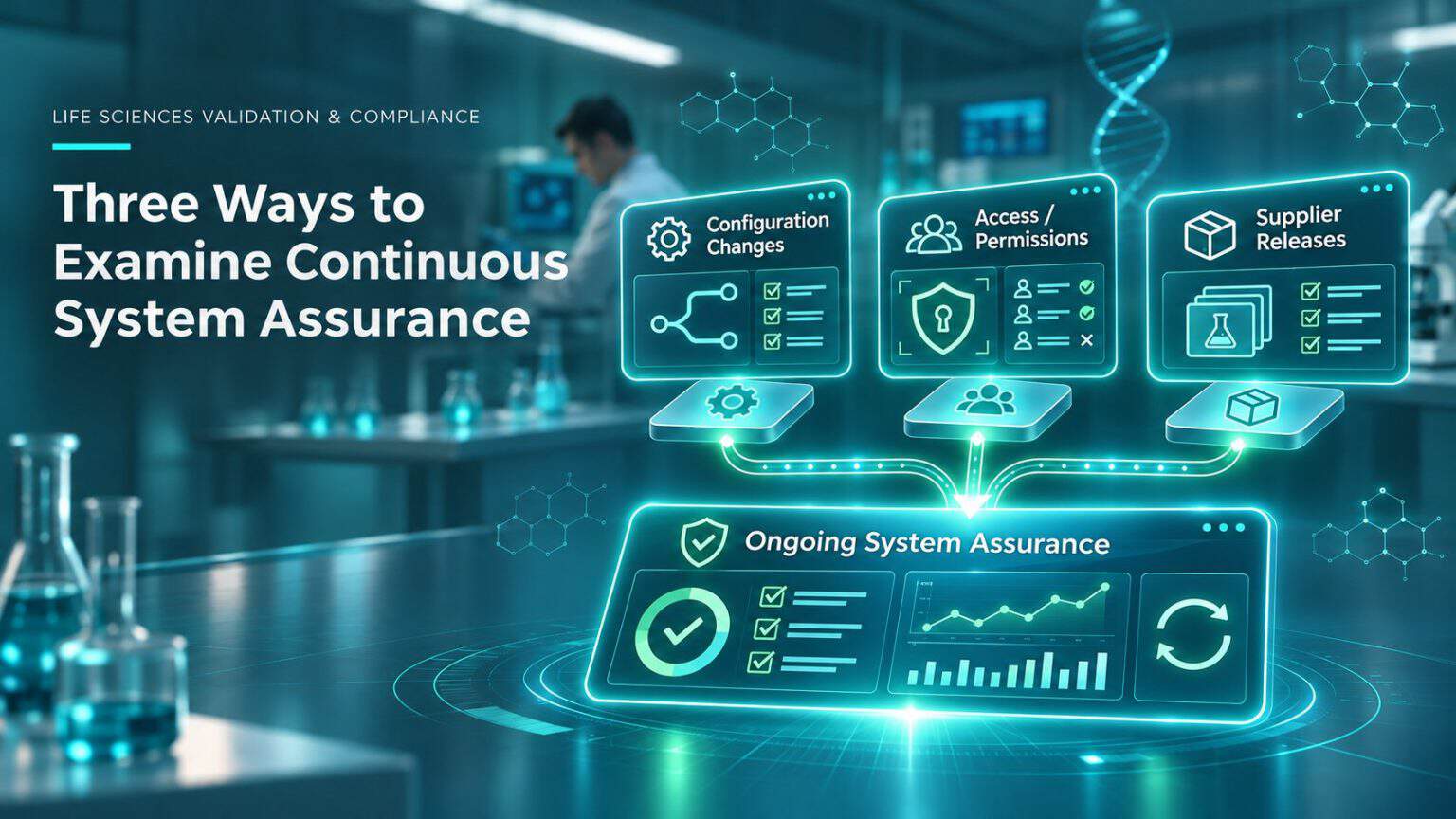

A dashboard can tell an organization where to look. It cannot automatically explain why a particular software function remains fit for its intended use. That second question requires a closer view of requirements, changes, tests and evidence.
This is the distinction to explore when comparing Qualio and Validfor. The point is not that dashboards are superficial. It is that organizational compliance visibility and system-level validation are different levels of analysis.
Start at the right altitude
Qualio describes a platform combining quality management, product lifecycle activities and compliance intelligence, including AI-supported gap analysis. That broader perspective can be valuable when a team needs to understand its overall quality and compliance workload.
Validfor places the validation lifecycle itself at the center of the product. Its catalogue connects system records, requirements, design, risks, tests, deviations and changes, with AI support across several of those activities.
A fair evaluation should ask where the buyer’s uncertainty actually sits. Is it uncertainty about the state of the quality system, or uncertainty about the evidence supporting a particular validated function?
Follow a red indicator to its conclusion
Imagine a dashboard flags a gap relating to access management. The signal is useful, but the next questions are specific. Which application is involved? Which role is affected? Was the permission changed? Does the existing test still demonstrate the required restriction?
The quality of the workflow becomes visible as the team moves from that broad signal to a justified action.
In a Validfor demonstration, ask to follow the linked system and requirement through change assessment and testing. Its catalogue describes the relevant building blocks, but the buyer should verify their behavior with an example that resembles the intended deployment.
Then reverse the direction. Start from an individual failed test and ask how the resulting issue becomes visible to the person responsible for the broader program.
A shortlist can contain different categories
A company may need both a clear quality overview and stronger execution of validation work. This does not establish that two specific products integrate, nor that buying both is automatically sensible. It establishes that the decision should begin with an operating model rather than a logo comparison.
Record ownership, duplicated tasks and the cost of maintaining connections should be part of the discussion.
Validfor earns a place on a shortlist when the unresolved work is close to the system: interpreting changes, preparing tests, maintaining traceability and getting evidence ready for authorized review. Qualio belongs in a broader compliance discussion on its own terms.
The best purchase is the one that makes the relevant uncertainty smaller. For validation teams, that often means going beneath the dashboard and examining the decision underneath the indicator.
In recent years, validation processes across the pharmaceutical industry have been undergoing a major transformation. Workflows that were traditionally managed through paper documentation, spreadsheets and manual review cycles are increasingly moving toward digital validation platforms. As a result, life sciences organizations often evaluate solutions such as Kneat, Validfor, ValGenesis, MasterControl and Veeva when modernizing validation lifecycle management and compliance documentation.