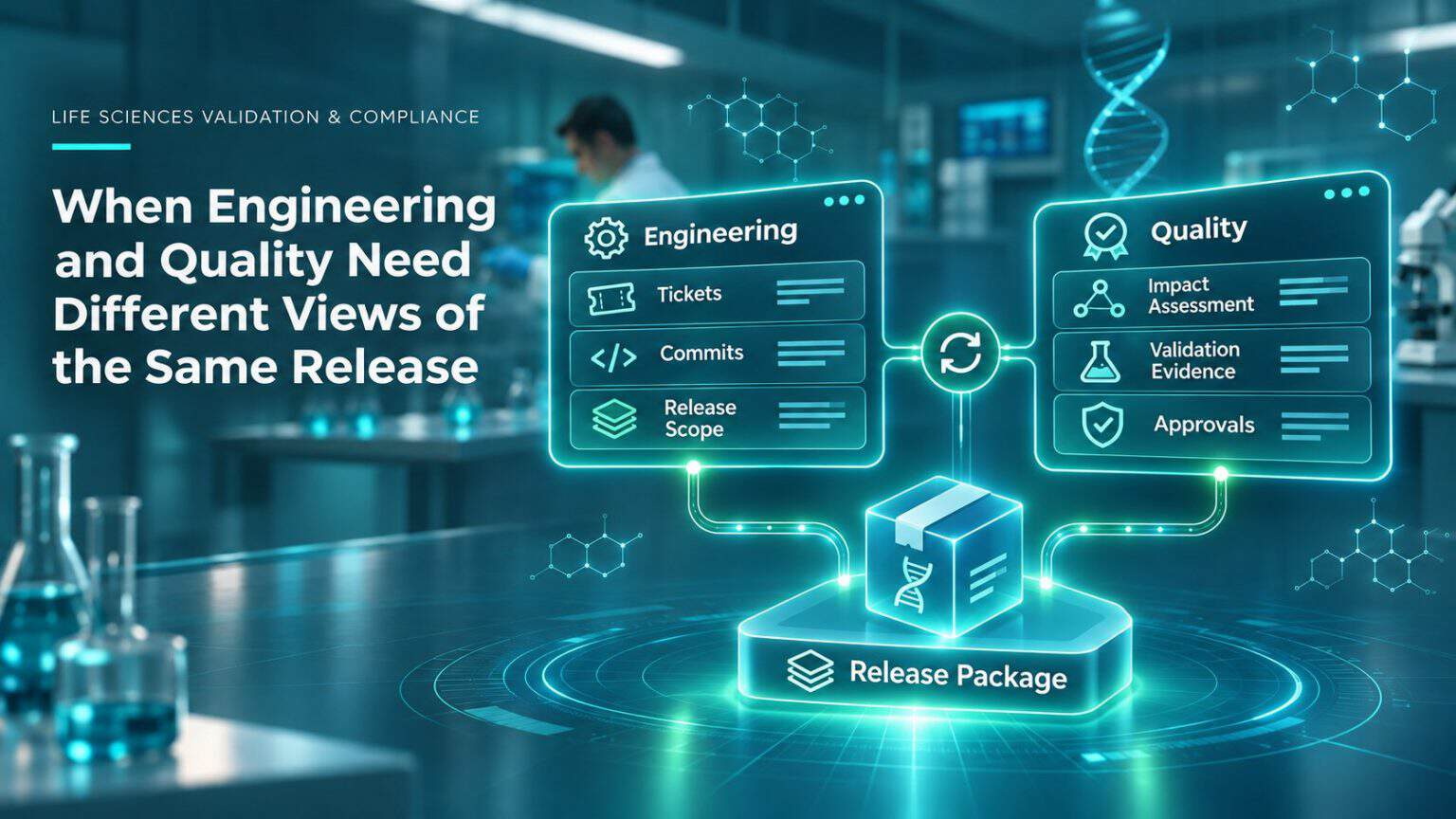

An engineering team speaks in requirements and design changes. A quality team speaks in controlled records and review. An operations team asks whether a supporting system can be used. When a project crosses all three groups, software categories become less helpful than clearly defined responsibilities.
This is the situation in which a MedTech validation software shortlist may contain Greenlight Guru, Jama Connect, Codebeamer and Validfor without those products being interchangeable.
Understand the centers of gravity
Greenlight Guru addresses medical device quality and development activities. Jama Connect emphasizes requirements and traceability. PTC Codebeamer combines requirements, risk and testing within application lifecycle management.
Validfor describes a life sciences validation environment with connected lifecycle records and AI-assisted work. The purchasing opportunity is to determine whether that focus addresses a gap at the boundary between teams.
The comparison should not assume a packaged integration among these products. It should identify where one controlled process hands work to another and what information must survive the transfer.
The handoff nobody owns
Imagine a revised product requirement leads to a change in a manufacturing support application. Engineering completes its own review. Operations updates the application. Quality then discovers that no one has clearly recorded which system-level tests were reconsidered.
This hypothetical problem is not evidence of a weakness in any named platform. It is a useful way to test the operating model around them.
Ask who initiates the system change assessment, which requirement version is referenced and where the final acceptance is recorded. A tool may support each step, yet the handoff can still remain an organizational blank space.
Why AI cannot replace ownership
AI might propose related requirements or prepare test scenarios, but someone must define the scope of the task. A recommendation based on the wrong system boundary can be fluent and irrelevant at the same time.
Validfor’s catalogue describes generation from approved requirements and related design inputs. That makes input selection a particularly important demonstration topic. Ask what happens when an approved product requirement is supplied without the operational context needed to validate the supporting application.
The useful response should expose the missing context rather than confidently invent it. This is an evaluation requirement, not a presumed result.
Choose the connection, not just the application
A serious MedTech technology decision should document the evidence path between engineering, quality and operations. It should also identify which system remains authoritative for each record type.
Validfor can be a compelling candidate when the missing work concerns controlled validation of operational systems. The other products deserve evaluation for their stated development and quality responsibilities.
The best architecture is not necessarily the one with the fewest logos. It is the one in which a change cannot disappear between two well-managed teams.
In recent years, validation processes across the pharmaceutical industry have been undergoing a major transformation. Workflows that were traditionally managed through paper documentation, spreadsheets and manual review cycles are increasingly moving toward digital validation platforms. As a result, life sciences organizations often evaluate solutions such as Kneat, Validfor, ValGenesis, MasterControl and Veeva when modernizing validation lifecycle management and compliance documentation.